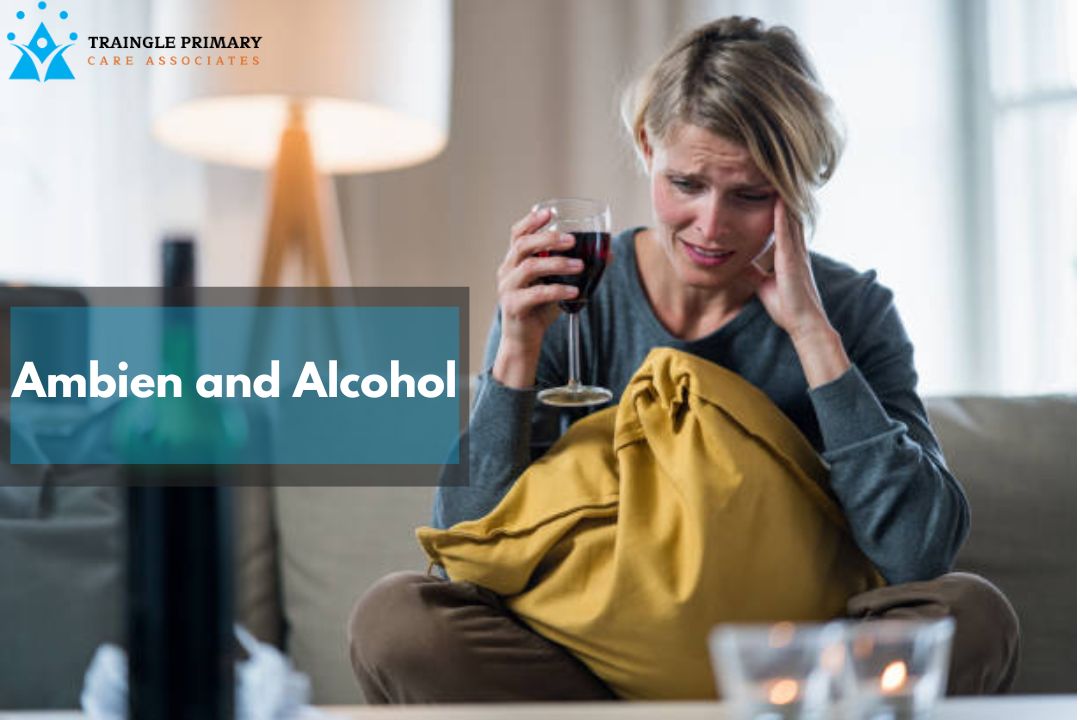
Ambien is a controlled medication only doctor prescribing sleeping aids such as Ambien (Zolpidem) in serious patients cases sleep problem, Do not drink alcohol while taking these pills.
Mixing Ambien and alcohol may seem harmless to some people, but the reality is far more serious, both Ambien and alcohol act as central nervous system (CNS) depressants. This means they changes or slow down brain activity, breathing, and heart rate in the body. It can permanently damage your liver and greatly increase the risk of an Ambien overdose.
Combining two addictive substances like Ambien and alcohol is not safe. It can cause life-threatening effects quickly and may lead to addiction with continued use. If someone cannot stop using Ambien and Alcohol together, it is an emergency time to seek professional help is important. Call The Triangle Primary Care Recovery Center today to get started.
What Is Ambien?
Ambien is the brand name for zolpidem, a sedative-hypnotic drug prescribed for sleep disorders and insomnia. Ambien (Zolpidem ) affects the chemicals in the brain and calms your central nervous system, supporting better sleep. Ambien pills are addictive and habit-forming, take more than two weeks, and as your body builds tolerance, you may need more pills to feel the same effect. However, long-term use of Ambien decreases your daily ordinary tasks, like driving, running, and can lead to physical harm from overdose.
What Happens When You Mix Ambien and Alcohol?
Ambien and alcohol are known as central nervous system depressants, these both substances work by slowing down brain activity, making you less alert and slowing your movement, reaction time, and breathing.
When taken together, their effects become much stronger. Even a small amount of alcohol can greatly increase Ambien’s effects. Your brain slows down more than either substance would cause on its own, and your body’s automatic functions, including breathing, can become dangerously suppressed.
Risks and Side Effects
1. Extreme Drowsiness and Sedation
Even one drink taken alongside Ambien can leave you far more sedated than you’d expect. That heightened drowsiness raises the risk of falls, accidents, and injuries, particularly in older adults, whose balance and reflexes are already slower. Getting behind the wheel or operating any machinery in that state is both extremely dangerous and illegal in most places.
2. Respiratory Depression
The most serious risk, though, is respiratory depression. Both substances slow your breathing on their own; together, they can bring it down to a dangerously low rate, or suppress it entirely during sleep. Because this can happen while you’re unconscious and alone, it can be fatal.
3. Memory Loss and Blackouts
Memory is another casualty. Ambien already makes it difficult to form new memories while it’s active, and alcohol makes that significantly worse. People who mix the two often wake up with no recollection of conversations, phone calls, or things they did the night before, sometimes having put themselves in dangerous situations they’re completely unaware of.
4. Sleep Behaviors (Parasomnias)
Then there are the sleepwalking episodes. Ambien has a well-documented history of triggering complex behaviors during sleep, driving, eating, making calls, all while the person appears to be awake but isn’t. Alcohol makes these far more likely, and the person almost never remembers any of it afterward.
5. Overdose Risk
Finally, mixing these two substances substantially increases the chance of accidental overdose. Warning signs include deep confusion, limpness, very slow or irregular breathing, bluish lips or fingernails, and loss of consciousness. Any of these require immediate emergency medical attention.
How Long After Drinking Can You Take Ambien?
Many people believe that it is acceptable to take Ambien after drinking a few hours. Regrettably, it is not as simple as it appears.
Medical personnel frequently recommend that individuals delay the administration of any sedative sleep medication by a minimum of 4–6 hours per drink. Nevertheless, the extent of this variability is contingent upon the specific factors at play:
- Alcohol metabolism undergoes a substantial decrease as we age.
- The distribution of alcohol in the body is influenced by body weight.
- The rate at which alcohol is decomposed is determined by liver function.
- The absorption of alcohol is slowed by food ingestion, which prolongs its duration of action.
- Other medications—certain medications interact with both alcohol and zolpidem
In order to ensure the utmost safety, numerous physicians advise abstaining from alcohol on the day of Ambien administration. Seek personalized advice from your prescribing physician at all times.
Who Is at Higher Risk?
While mixing Ambien and alcohol is dangerous for anyone, certain groups face heightened risks:
- Older adults (65+): Slower metabolism means both substances linger longer in the system. Falls and hip fractures are a serious concern.
- People with respiratory conditions: Those with sleep apnea, COPD, or asthma are especially vulnerable to breathing complications.
- Individuals with substance use disorders: A history of alcohol misuse increases the likelihood of taking more medication than prescribed.
- Those taking other sedatives or medications: Anti-anxiety drugs, opioids, antihistamines, and muscle relaxants all compound the CNS depression.
Treatment for Ambien and Alcohol
Misusing Ambien and alcohol long-term increases the risk of a fatal mixture. If you have an addiction to Ambien, alcohol, or both, you can get treatment through our 12-step program. Contact The Triangle Primary Care Recovery Center. Call to speak with a representative who can help you start treatment for alcohol or Ambien addiction.
Conclusion
It’s never safe to mix alcohol with Ambien. Both drugs slow down your brain and body, and when you take them together, they can stop important functions in ways that can quickly become life-threatening. There is no social event, glass of wine, or short-term sleep fix that is worth the risk of memory loss, respiratory depression, dangerous sleep behaviors, or overdose.
If you have trouble sleeping issues and are thinking about mixing Ambien with alcohol or other drugs, as your doctor prescribes sleep medicine, never try to mix them; it can create serious and dangerous side effects in your body. The best thing you can do is share this body issue with a doctor, who can create the best treatment for your digestive system.
Important note – Talk to your doctor before combining any medications with alcohol. If you are looking for safer ways to improve your sleep, ask about CBT-I and evidence-based sleep hygiene strategies. Your safety comes first.
Frequently Asked Questions
Can you take Ambien after drinking alcohol?
No, that is not in any way safe. The sedative properties of Zolpidem can be greatly enhanced by consuming even a single drink. Alcohol stays in your bloodstream for hours after your last drink, and the effects vary too widely during that time to predict how it will interact with Ambien. The FDA label for Ambien specifically states that it is not to be used with alcohol. If in doubt, do not take the medication that evening and speak to your doctor.
How long should you wait after drinking alcohol to take Ambien?
There is no single safety time frame for this; it can depend on a range of factors, including liver health, age, and body weight, as well as the amount of alcohol consumed. Although the average metabolism of alcohol is about one standard drink per hour, this varies widely. Most health care providers recommend not taking Ambien at all on a day when you’ve drunk alcohol. In general, some doctors recommend waiting at least 4–6 hours after each drink if you feel that you absolutely need to take the medication, but this is not a guarantee of safety. Follow your doctor’s instruction at all times.
What Are The Risks Of Mixing Ambien And Alcohol?
If someone has taken ambien and then remembers they’ve been drinking (or vice versa), that person needs to be kept under very close watch and not left alone. You should not be in control of any machinery or a vehicle under any circumstances. Lie down in a safe location. Make sure to have someone check on you regularly. Call 911 immediately if you have any of the emergency warning symptoms described above, are not awake or struggling to breathe. A poison control center (1-800-222-1222 in the U.S.) can also help in an emergency.
Are there any non-habit forming alternatives to Ambien?
Yes, absolutely. The title of most effective and durable treatment for chronic insomnia without harmful drug interactions is held by cognitive-behavioral therapy for insomnia (CBT-I) according to the sleep medicine experts. Lifestyle changes, like maintaining a consistent bedtime, limiting caffeine in the afternoon, keeping lighting conditions low during the evening hours, and sleeping in a cool environment, can also help improve sleep quality by large amounts. For sleep-related issues, low doses of melatonin are beneficial in some cases. If you are dependent on Ambien or find that you need it every single night, speak with your doctor about alternative strategies and a plan to taper off the medication gradually.