Most people try to ignore small health problems. A headache gets treated with a painkiller. Feeling tired is blamed on work or stress. Many people think the problem will go away on its own.
Sometimes that’s true. But sometimes a small problem slowly becomes a bigger one. Because the symptoms appear little by little, they can start to feel normal.
After more than 20 years in family and internal medicine, Dr. Kofi Bruce-Mensah at Triangle Primary Care Associates says many patients wait months—or even years—before getting checked. By then, a problem that could have been easy to treat may have become more serious.
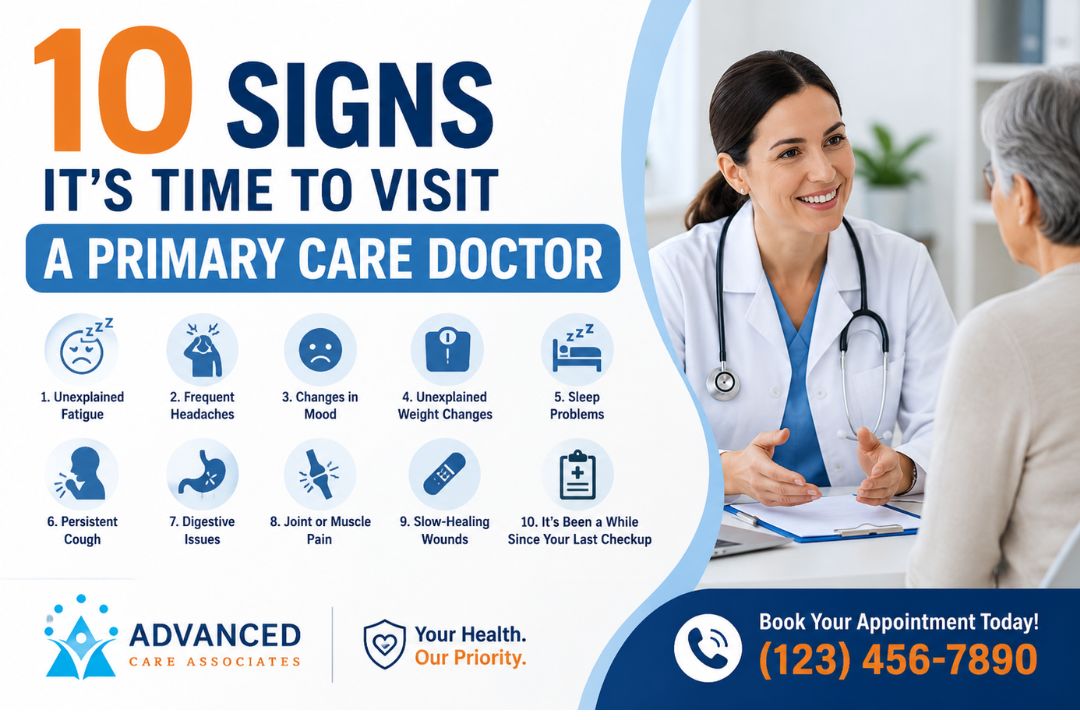
Here are 10 signs that it’s time to schedule an appointment with your primary care doctor.
1. It’s Been More Than a Year Since Your Last Physical
A yearly physical is a simple way to keep track of your health. During the visit, your doctor checks things like your blood pressure, cholesterol, blood sugar, and weight. These can change over time without you noticing.
For example, high blood pressure often has no warning signs until it begins affecting your heart, kidneys, or eyes. If someone’s kidneys are affected by high blood pressure, the body indicates signs such as swelling in the feet and pain all over the body. A yearly exam helps find these problems before they become serious.
2. You’re Always Tired
Everyone feels tired sometimes. But if you still feel exhausted after getting enough sleep, it could mean something else is going on.
Ongoing tiredness may be linked to thyroid problems, anemia, sleep apnea, depression, or diabetes. A simple checkup and blood tests can often help find the cause.
3. You’ve Lost or Gained Weight Without Trying
If your weight changes without changing your eating habits or exercise routine, it’s a good idea to tell your doctor.
Unexpected weight changes can be caused by thyroid problems, diabetes, digestive issues, stress, or other health conditions. Even small changes over several weeks can be important.
4. Your Cold or Cough Isn’t Going Away
Most colds get better within 7 to 10 days.If you’ve had a cough for two or three weeks, still have a fever, or your symptoms are getting worse instead of better, it’s time to see your doctor. You may need treatment instead of more over-the-counter medicine.
5. You Have a Long-Term Health Condition
Living with diabetes, high blood pressure, asthma, or heart disease means regular medical care is important. Routine checkups help make sure your treatment is working, and your condition stays stable.
Routine visits help your doctor adjust your treatment, monitor your health, and prevent small problems from becoming bigger ones. Managing these conditions is much easier with regular checkups.
6. Your Mood, Sleep, or Anxiety Has Changed
Everyone feels stressed or anxious from time to time. But if anxiety, sadness, trouble sleeping, or feeling overwhelmed starts affecting your daily life, don’t ignore it.
Primary care doctors can help with mental health concerns and connect you with the right treatment when needed. At Triangle Primary Care Associates, behavioral health providers also care for patients with anxiety, depression, and related conditions.
7. You Have Frequent Headaches, Dizziness, or Memory Problems
A headache once in a while is common. But frequent headaches, dizziness, or memory problems should be checked by a doctor.
These symptoms may be caused by high blood pressure, stress, poor sleep, migraines, or other medical conditions. Your primary care doctor can evaluate the problem and refer you to a specialist if needed.
8. Your Child Needs a Checkup or Doesn’t Seem Like Themselves
Children may find it difficult to verbalize their problems; the doctor will assess the child’s stature and development; the check-up also ensures that a record of the child’s overall health is maintained. When the child exhibits atypical malaise, misses developmental milestones, or continues to complain about the same problem, a check-up appointment is warranted.
9. You Need a Referral or Prescription Refill
You don’t have to be sick to visit your doctor. You may need a prescription refill, a routine physical, or a referral to see a specialist. Having a primary care doctor makes these visits easier because they already know your medical history.
10. You Just Don’t Feel Like Yourself
Sometimes you can’t explain what’s wrong—you just know something feels different. Trust that feeling. Your primary care doctor knows your medical history and can help find out what’s changed, even if your symptoms are hard to describe.
About the Care Team
Dr. Kofi Bruce-Mensah, MD, MS, MBA, is board-certified in Internal Medicine and has more than 20 years of experience in family and internal medicine. He earned his medical degree from the University of Ghana Medical School and completed his Internal Medicine training at New York Hospital Medical Centre of Queens. He is affiliated with Duke University Hospital and treats patients with high blood pressure, diabetes, anxiety, and other long-term health conditions at Triangle Primary Care Associates in Wake Forest, North Carolina.
Monica Mianzo Capp is a board-certified Nurse Practitioner and Psychiatric Mental Health Provider. She completed advanced training through the University of South Carolina and the University of South Alabama. She is certified by the American Nurses Association and the American Psychiatric Nurses Association and also leads the Family Nurse Practitioner to Psychiatric Mental Health Nurse Practitioner Program at Bluefield College.
If you’re looking for a primary care doctor in Wake Forest, NC, scheduling a yearly wellness visit is one of the best ways to stay healthy and catch problems early.
Ready to Schedule?
Triangle Primary Care Associates is one of North Carolina’s largest independent primary care networks. Most locations are open seven days a week and offer same-day appointments.
The practice is accepting new patients and works with many major insurance plans, including Aetna, Blue Cross, United Healthcare, and AARP Medicare.
Call +1 (919) 554-0900, request an appointment online, or email info@triangleprimarycareassociates.com to get started.
Frequently Asked Questions
Should I see a doctor?
If you’re not sure whether your symptoms need medical attention, you’re not alone. Many people wait because they think the problem isn’t serious. If your symptoms last, get worse, or keep coming back, it’s a good idea to schedule a visit with your primary care doctor.
How often should adults visit a primary care doctor?
Most adults should have a yearly physical, even if they feel healthy. People with long-term health conditions may need more frequent visits based on their doctor’s advice.
What symptoms should never be ignored?
Chest pain, trouble breathing, severe dizziness, sudden weakness, confusion, high fever that won’t improve, or unexplained weight loss should always be checked by a healthcare provider as soon as possible.
Can a primary care doctor treat anxiety?
Yes. Primary care doctors can diagnose and treat anxiety, depression, and many other mental health concerns. They can also recommend counseling or refer you to a mental health specialist when needed.
Should I visit urgent care or my primary doctor?
For common illnesses, ongoing symptoms, prescription refills, or routine care, your primary care doctor is usually the best choice. Urgent care is better for minor injuries or illnesses that need immediate attention when your doctor’s office is closed.
What happens during an annual physical?
During a physical exam, your doctor reviews your medical history, checks your blood pressure, weight, and other vital signs, discusses your health concerns, and may recommend blood tests or screenings based on your age and risk factors.
Sources
1. Annual Physicals & Preventive Care: The U.S. Department of Health and Human Services recommends regular preventive care, including routine checkups and age-appropriate screenings, to help detect health problems early and reduce the risk of serious illness.
Source: https://health.gov/myhealthfinder
2. High Blood Pressure: According to the Centers for Disease Control and Prevention (CDC), high blood pressure often has no symptoms, making regular blood pressure checks essential for early detection and treatment.
Source: https://www.cdc.gov/high-blood-pressure/
3. Mental Health: The National Institute of Mental Health (NIMH) notes that persistent anxiety, depression, or changes in mood and sleep can affect daily life and should be evaluated by a healthcare professional.
Source: https://www.nimh.nih.gov/health
4. Diabetes & Routine Care: The National Institute of Diabetes and Digestive and Kidney Diseases (NIDDK) recommends regular medical visits for people with chronic conditions such as diabetes to help prevent complications and improve long-term health.
Source: https://www.niddk.nih.gov/health-information