Chronic diseases don’t take breaks. Diabetes, hypertension, heart disease — these conditions need attention every day, not just during annual checkups. And yet, millions of Americans still rely on coverage that treats chronic illness as an occasional problem rather than a permanent reality.
That’s where Medicare Advantage plans for chronic conditions come in. Unlike standard Medicare, these plans are built around what people with ongoing health needs actually use: regular monitoring, remote check-ins, telehealth visits, and coordinated care across providers.
This guide breaks down how it all works — the monitoring systems, the devices, the coverage details, and what to look for in a primary care provider who actually manages your condition rather than just documenting it.
Chronic Care Monitoring for Long-Term Disease Management
What Is Chronic Care Monitoring and Why It Matters
Chronic care monitoring means your health is tracked on an ongoing basis — not just when something goes wrong. Your provider collects data between visits, flags early warning signs, and adjusts your treatment plan without waiting for a crisis.
For patients managing conditions like diabetes or hypertension, this matters because deterioration usually happens gradually. Blood pressure creeps up. Glucose levels drift. By the time you feel it, the damage is already done.
Monitoring catches those shifts early, when they’re still manageable.
How Chronic Care Monitoring Supports Diabetes and Hypertension Patients
For diabetes patients, monitoring centers on blood glucose trends over time. A single reading tells you what happened in one moment. Continuous or frequent monitoring tells you what’s actually happening with your body — how your diet, activity, stress, and medication interact.
For hypertension patients, the same logic applies. Blood pressure varies a lot throughout the day. Home readings taken at different times give your doctor a far more accurate picture than a single office reading.
Both conditions improve with consistent monitoring. The data creates accountability — for patients and providers both.
Role of Primary Care Providers in Continuous Monitoring
Your primary care provider (PCP) is the coordinator. They receive the data from monitoring devices, review trends, order adjustments, and talk to specialists when something needs deeper attention.
Without a strong PCP relationship, monitoring data just sits there. The value is in what happens with it.
Providers like Triangle Primary Care Associates integrate monitoring into their care model — which means your data is actually being reviewed and acted on between visits, not ignored until your next appointment.
How Telehealth Improves Chronic Care Monitoring
Telehealth removed one of the biggest friction points in chronic care: getting to the office. Patients with mobility issues, transportation problems, or demanding schedules often skipped follow-ups. That’s a serious problem when your condition requires consistent contact.
With telehealth, your provider can:
- Review your latest glucose or blood pressure readings
- Adjust medications without an in-person visit
- Check in more frequently without burdening the patient
The result is more touchpoints, fewer gaps, and earlier course corrections.
Health Monitoring Devices for Managing Chronic Conditions
What Are Health Monitoring Devices in Primary Care?
Health monitoring devices are tools used at home or in clinical settings to collect real-time data about your condition. When connected to your care team, they transform from simple gadgets into clinical tools.
In primary care, these devices close the gap between visits. Instead of relying on a patient’s memory of how they felt last month, providers get actual numbers.
Common Devices Used
Continuous Glucose Monitors (CGMs): Track blood sugar in real time, often 24/7. Far more useful than finger-stick tests for spotting dangerous patterns.
Blood Pressure Monitors: Home BP cuffs that sync with apps or care platforms. Some are connected directly to provider systems.
Pulse Oximeters: Measure oxygen levels. Relevant for COPD, heart failure, and post-COVID care.
Wearables (smartwatches, fitness bands): Track heart rate, sleep, activity, and sometimes ECG data. More useful when integrated with a care team than used alone.
Weight Scales (connected): Daily weight monitoring can detect fluid retention early in heart failure patients — a day or two before symptoms appear.
How Remote Monitoring Helps Doctors Track Patient Health
Remote Patient Monitoring (RPM) means your device sends data directly to your provider’s system. Your doctor or care team reviews it regularly — sometimes daily — and contacts you if something looks off.
This changes the dynamic. Instead of your provider reacting to problems at appointments, they’re watching trends and intervening early.
RPM is particularly useful for:
- Patients recently discharged from a hospital
- Those managing multiple chronic conditions
- Patients who have trouble coming in frequently
Benefits of Using Health Monitoring Devices at Home
- Earlier detection: Problems are caught before they become emergencies
- Fewer ER visits: Data-driven adjustments reduce acute flare-ups
- Better medication management: Your doctor can see how you’re actually responding, not just how you report feeling
- Patient engagement: Seeing your numbers daily tends to improve adherence to treatment plans
How Medicare Advantage Plans for Chronic Conditions Support Ongoing Care
Coverage for Chronic Care Monitoring Services
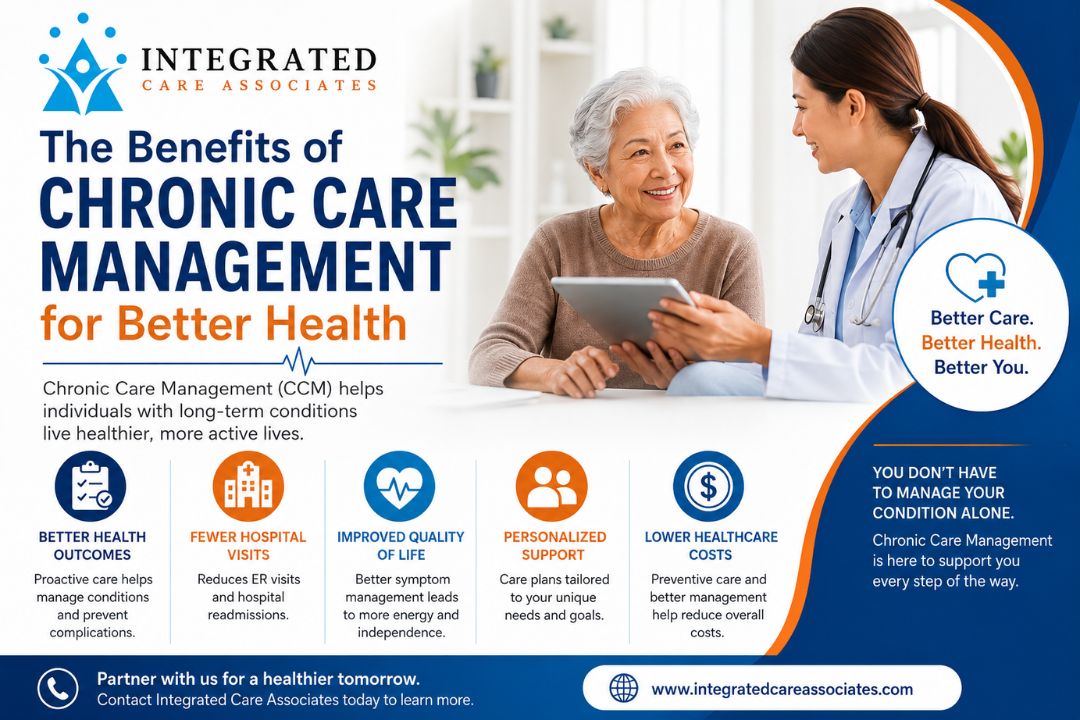
Standard Medicare (Part A and B) covers a limited range of chronic care services. Medicare Advantage plans for chronic conditions often go further — covering Chronic Care Management (CCM) programs, care coordinator fees, and additional check-ins that wouldn’t be reimbursed under original Medicare.
Some plans specifically designed for people with serious chronic illness, known as Special Needs Plans (SNPs), go even further with tailored benefits.
Key coverage areas to look for:
- Chronic Care Management (CCM) services (billing code CPT 99490 and related)
- Regular care coordinator access
- Medication therapy management
Support for Telehealth and Virtual Visits
Medicare Advantage plans for chronic conditions have expanded telehealth coverage significantly since 2020. Most plans now cover:
- Video visits with primary care providers
- Virtual specialist consultations
- Remote check-ins for medication management
Confirm with your specific plan — coverage varies. But telehealth is now mainstream, not an add-on.
Coverage for Health Monitoring Devices and Preventive Care
Some Medicare Advantage plans cover Remote Patient Monitoring (RPM) devices as part of their benefit structure. This can include:
- Continuous glucose monitors for diabetic patients
- Connected blood pressure monitors
- Coverage for the monthly data review services
Preventive care — screenings, vaccinations, annual wellness visits — is also typically covered at no additional cost under Medicare Advantage.
Access to Primary Care and Specialist Coordination
One of the real advantages of Medicare Advantage plans for chronic conditions is care coordination. Many plans include care managers who help patients navigate between their PCP, cardiologist, endocrinologist, or other specialists.
Without coordination, patients often get conflicting instructions from different providers. A good plan — and a good primary care provider — keeps everything aligned.
Integrating Primary Care with Chronic Condition Management
Importance of Choosing the Right Primary Care Provider
Your PCP is the person who sees the whole picture. Specialists see one piece. Your PCP connects them.
For chronic condition management, this matters more than most patients realize. A provider who tracks your complete history, coordinates with your specialists, and stays ahead of your condition does something very different from a provider who just responds to whatever you bring to each visit.
Not all primary care practices are set up for this kind of ongoing management. Look for providers that explicitly offer chronic care management programs, remote monitoring integration, and telehealth access.
Personalized Treatment Plans for Chronic Conditions
A standard protocol for diabetes or hypertension is a starting point. A treatment plan that actually works is built around your specific numbers, lifestyle, medications, and history.
Good chronic care management means your plan gets updated as your condition changes — not just reviewed once a year during a wellness visit.
Preventive Care and Early Diagnosis Benefits
For patients managing one chronic condition, the risk of developing a second is real. Diabetes increases cardiovascular risk. Hypertension can lead to kidney disease. The monitoring infrastructure that’s already in place for your primary condition can also catch early signs of a secondary one.
Preventive care isn’t a separate category. It’s part of ongoing management.
Coordinated Care for Better Health Outcomes
When your PCP, specialists, pharmacist, and care coordinator are all working from the same information, your care is better. Medications don’t conflict. Test results don’t get repeated. Referrals happen faster.
Medicare Advantage plans for chronic conditions support this coordination structurally — through care management fees, specialist networks, and shared records systems.
Benefits of Medicare Advantage Plans for Chronic Conditions
Affordable Long-Term Healthcare Support
Chronic conditions are expensive. Medication, monitoring equipment, lab work, specialist visits — it adds up. Medicare Advantage plans often include lower out-of-pocket costs for high-frequency services, which is exactly what chronic condition management requires.
Some plans also cap annual out-of-pocket spending, providing a ceiling on what you’ll pay even in a bad year.
Reduced Hospital Visits Through Monitoring
Hospitalizations are the most expensive and disruptive part of chronic illness. Most are preventable with proper monitoring and early intervention.
Studies consistently show that patients enrolled in chronic care management programs have fewer ER visits and hospitalizations than those receiving standard care. The monitoring infrastructure is the reason.
Improved Quality of Life with Continuous Care
Living with a chronic condition managed well is different from living with one managed poorly. Stable glucose levels, controlled blood pressure, and adjusted medications mean fewer symptoms, more energy, and less anxiety about what’s happening inside your body.
Continuous care doesn’t just prevent bad outcomes — it improves daily experience.
Access to Comprehensive Healthcare Services
Medicare Advantage plans for chronic conditions often include benefits beyond what original Medicare covers:
- Vision care
- Dental coverage
- Hearing aids
- Fitness programs
- Transportation to medical appointments
For patients with chronic conditions who may have related health needs across these areas, these benefits reduce total healthcare costs.
Frequently Asked Questions
What are Medicare Advantage plans for chronic conditions?
These are private insurance plans (also known as Part C) that provide all the benefits of Original Medicare plus extra support specifically tailored for people with long-term health issues.
How does chronic care monitoring help manage long-term diseases?
It provides a continuous link between you and your doctor. By tracking your health monthly, your medical team can make small adjustments to your care that prevent major health crises.
Are health monitoring devices necessary for chronic conditions?
While not “mandatory,” they are highly recommended. Devices like glucose monitors and blood pressure machines provide the data necessary for your doctor to make informed, safe decisions about your treatment.
Does Medicare Advantage cover telehealth services?
Yes. Most plans offer extensive telehealth coverage, allowing you to consult with your primary care provider or specialists via phone or video.
How can a primary care provider help manage chronic conditions?
Your PCP coordinates your entire care plan, manages your medications, orders necessary screenings, and provides the consistent support needed to manage health over the long term.
Can remote monitoring reduce hospital visits?
Absolutely. Studies show that patients using remote monitoring have significantly lower rates of emergency room visits because issues are detected and treated before they become emergencies.
Conclusion
Managing a chronic condition long-term comes down to three things: consistent monitoring, the right coverage to support it, and a primary care team that actually uses the data.
Medicare Advantage plans for chronic conditions exist because standard coverage wasn’t built for people who need daily management, not just annual checkups. Remote monitoring devices extend your care team’s visibility between visits. And a primary care provider who integrates all of it keeps your treatment plan current and your health stable.
If you’re living with diabetes, hypertension, or another chronic condition and feel like your care is reactive rather than proactive, that’s worth changing. A provider who offers chronic care management — with monitoring, telehealth, and coordinated follow-up — delivers a different kind of care.
Talk to a primary care provider about setting up a personalized chronic care management plan that works with your Medicare Advantage coverage.